Coast Down, Write It Down: The In-Lap That Sets Up Your Next Session
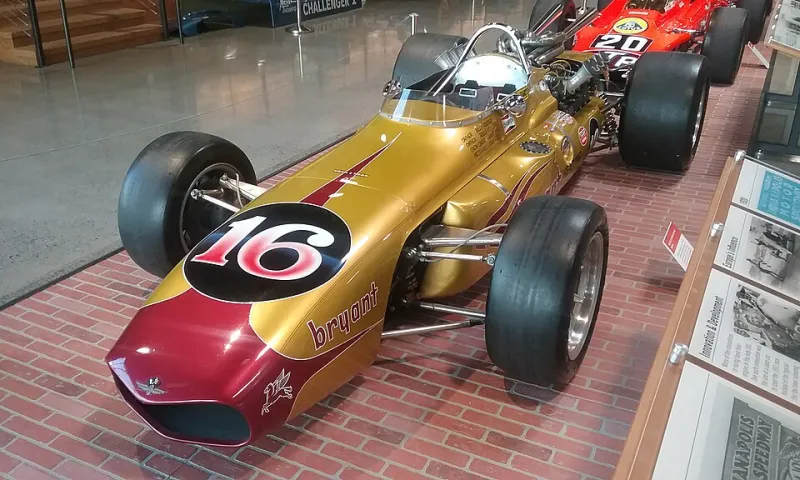
Photo: Josh Baumgartner, CC BY-SA 4.0, via Wikimedia Commons
There's a moment at every UK track day when the flag comes out and half the pit lane visibly relaxes. Shoulders drop, the radio chatter stops, and the cool-down lap becomes something to be endured — a slow trundle round the outside of the circuit while you rehearse the lap you should have had.
That's a waste. The in-lap is the cleanest diagnostic window of your entire session, and it costs you nothing but four minutes of attention.
Why the slow lap tells the truth
At ten-tenths, your car is a wall of noise and load. Wind roar, engine, helmet buffeting, the constant negotiation of grip — all of it masks the small signals. Ease back to a steady 40 or 50 mph, off the brakes and off the throttle, and the car returns to something close to a known state. Things that were hidden suddenly aren't.
A wheel bearing that's been droning since Cadwell becomes obvious. A vibration you'd blamed on kerbs turns out to be there on smooth tarmac too. And the smell of hot brake pads, which you'd never notice with your visor down and your heart rate up, arrives in the cockpit like a passenger.
There's a second reason the in-lap matters: it's the only time you can compare like with like. Everything cools at a predictable rate, from a known heat load, in the same order every session. Your fourth lap of the day and your fourth lap of the afternoon are directly comparable in a way that two flying laps never are.
The routine, start to finish
The first hundred metres: hands and ears
Light hands on the wheel. Radio off if you can. Listen rather than drive. Anything that rises and falls with road speed, and disappears when you dip the clutch, is driveline — gearbox, diff, propshaft. Anything that changes with cornering load is a bearing, a CV joint or a top mount. That distinction alone is worth the lap.
The first brake application: read the pedal
Pick a point well before the corner and make one gentle, deliberate press. Not a stop — a measurement. Is the pedal longer than it was on your out-lap? Spongier? A pedal that grows through a session is fluid or a caliper that isn't releasing properly, and you want to know that in the pit lane rather than at the end of a straight.
Judder is worth splitting into two types. If it pulses in time with wheel rotation, think disc or hub. If it pulses with braking effort and fades as you slow, think pad deposits. They feel similar through your foot and they have completely different fixes.
Pit entry: pressures before anything else
Hot pressures are only meaningful for about ninety seconds. Take them before you take your helmet off, before you talk to anyone, before you start unloading the boot. Note which corner, and note the session number next to it.
One corner running three psi above its opposite is not a tyre problem. It's a dragging brake, a geometry asymmetry or a damper doing less work than its neighbour. The number is the start of the question, not the answer.
The pit-lane creep
Once you're off the circuit and away from anyone still on a flyer, find a quiet bit of tarmac and do a slow full-lock turn each way at walking pace. Listen for the differential. A chatter or clunk that wasn't there in the morning is worth a look before you go back out, and it's ten seconds of your life.
Smells, and what they mean
Sweet and slightly syrupy: coolant. Sharp and acrid: hot brake, or clutch if you've been slipping it in the paddock. Gear oil has a sulphurous edge you'll recognise once you've met it. Any of these after a normal session is a note in the book, not a panic — but it's a note you'll want at 7am the next morning when you're deciding whether to run.
Deposits, once you're parked
Before you cover the car, look at the discs. A grey, pad-shaped smear on an otherwise shiny face is a deposit, and it will throb through the wheel for the first half of your next session. If you see one, note which corner and how heavy it is. Dragging the brakes to "cool them" on the in-lap is exactly how you bake those in — coast, don't brake.
Log it, or lose it
Memory across a six-session day is fiction. By three o'clock you'll have merged the morning's soft pedal with the afternoon's vibration and built a theory out of nothing. A notebook page or a phone note fixes that: session number, ambient temperature, hot pressures by corner, pedal notes, noises, smells, disc observation, and one sentence on what you'd change.
One sentence is the important bit. Data without a hypothesis is just admin.
Two things not to do
Don't crawl unpredictably along the racing line on an open pit lane day when other cars are still flying. And don't spend the whole in-lap with the clutch down — engine braking is free cooling and it keeps the car stable.
Tomorrow starts on the in-lap
When you set cold pressures the next morning, set them from yesterday's hot numbers rather than the sticker in the door shut. When you pick a brake compound or a bias setting, do it with a page of evidence in front of you instead of a feeling. Then change one thing, and go and find out.
The cool-down lap is where your car stops performing and starts reporting. Four minutes of listening is the cheapest lap time on the market.