When Faster Setup Advice Makes You Slower on UK Tarmac
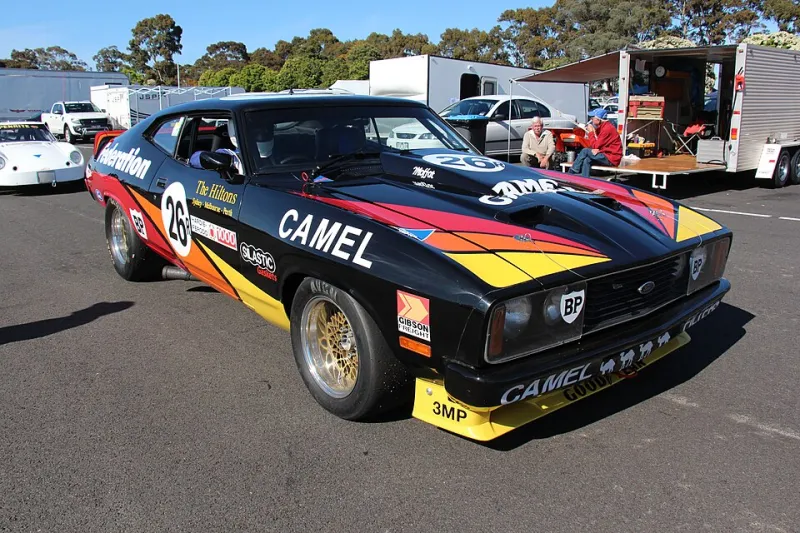
Photo: Sicnag, CC BY 2.0, via Wikimedia Commons
Every paddock has a version of the same conversation. Someone leans against a car, nods at the suspension and says it needs to be stiffer, lower or more aggressive. It sounds like progress. It often is not.
UK circuits are not smooth test tracks. They have surface changes, camber, bumps, kerbs and weather that can turn a dry setup into a handful by the end of a session. Here are five setup assumptions that quietly cost lap time, and what to try instead.
1. Stiffer is always faster
A stiff car feels precise. It responds quickly. On a smooth circuit, that can be genuinely quick. On a bumpy UK track, it can also skip across the surface and lose contact patch at exactly the wrong moment.
Cadwell Park and Oulton Park both punish suspension that refuses to absorb bumps. A car that is too stiff can feel sharp on turn-in and then go light mid-corner because the tyre is not following the road. The same applies to anti-roll bars. A big rear bar might reduce body roll, but if it unloads the inside rear tyre too aggressively, you lose traction out of slow corners.
Instead, think about compliance. Softer springs or bars can help the tyre stay in contact with the tarmac. Better damping can control the body without making the car harsh. Do not assume softer is slow. On a bumpy circuit, softer can be faster because the tyre is actually doing its job.
2. Lower is always better
Lowering a car reduces the centre of gravity, which sounds like free grip. But there is a limit. Go too low and you run out of suspension travel, hit bump stops, and upset the car over kerbs and surface changes. You can also change roll centres and camber curves in ways you did not intend.
British circuits are full of places where a low car suffers. Snetterton's kerbs, Donington's compression points and the general patchwork of old tarmac can all make a slammed setup a liability. If the car bottoms out under braking or skips over a kerb, you are losing more time than you gained from the lower centre of gravity.
Instead, check ride height and suspension travel together. Raise the car a few millimetres if needed. Look at bump stop contact and make sure the car can use its travel without crashing into the chassis. A slightly higher car that can absorb a kerb is usually quicker than a low car that cannot.
3. More camber is always more grip
Camber helps in corners, but it is not free. Too much negative camber reduces the contact patch under braking and on straights. It can also make the tyre run hot on the inside edge and cold on the outside. On a bumpy circuit, a heavily cambered tyre may not sit flat on the road when the suspension is moving.
Instead, use tyre temperatures across the tread to guide you. If the inside is much hotter than the outside, you may have too much negative camber for the track and the tyre. If the car is a road-based track car on semi-slicks, start with a sensible manufacturer range and adjust from there. More camber is not a magic number. It is a compromise.
4. Soft damping is always kinder on kerbs
Softer damping can help over kerbs, but only if it is controlled. If you simply soften everything, the body can float, roll too quickly or take too long to settle after a bump. That makes the car feel vague and can cost confidence in fast direction changes.
Damping has different jobs. Low-speed damping controls body roll and pitch. High-speed damping deals with sharp bumps and kerbs. A car that is harsh over kerbs may need less high-speed compression, not less of everything. A car that feels lazy on turn-in may need more low-speed control.
Instead, adjust damping with a purpose. If the car crashes over kerbs, look at high-speed compression. If it rolls too fast and feels unsettled, look at low-speed damping. Do not soften the whole car just because one kerb feels rough.
5. A dry setup will be fine in the damp
UK weather does not always give you a warning. A dry session can turn damp within minutes, and a setup that was perfect on a warm track can feel nervous in the wet. Ignoring that is a setup assumption in itself.
Instead, have a wet or damp plan. Lower tyre pressures slightly to help the tyre generate heat, but not so much that it feels vague. Adjust brake bias if the fronts are locking. Soften the bars or springs if the car is skating over surface water. Make the changes before the rain arrives, not after you have already had a moment.
How to test without wasting a session
Pick one problem at a time. Do a baseline run, make one change, then go back out and compare. Keep notes on tyre pressures, temperatures, weather and driver comments. What felt faster on lap three might feel slower on lap eight when the tyres are hot.
The best setup is not the stiffest, lowest or most aggressive. It is the one that lets the tyres work with the road you actually have. On UK tarmac, that usually means leaving a bit of compliance in the car and saving the aggression for the stopwatch, not the spec sheet.