Grip Isn't Everywhere: How UK Tarmac Changes Its Mind Mid-Lap

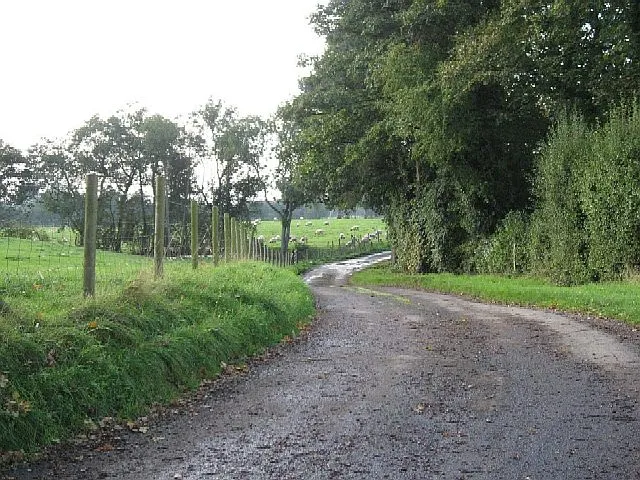
Photo: Basile Morin, CC BY-SA 4.0, via Wikimedia Commons
You can walk a UK circuit in the morning and conclude that it's grey. Twenty laps later, the same piece of tarmac has shown you five different personalities: a resurfaced corner that grips like a velcro mitt, a polished stretch of old aggregate where the fronts mutter instead of bite, a repair patch sitting exactly where you'd like to put the car, a rubbered-in line worth a chunk of lap time, and a damp seam under the trees that will have you pointing at the scenery if you're clumsy with the brake.
Treating a lap as one consistent grip level is one of the most common habits in club motorsport, and in Britain, with our climate and our repair budgets, it's one of the most expensive.
Why UK surfaces are a patchwork by design
Tracks resurface in sections, not in wholes. Budgets get signed off corner by corner, and the contractor who laid the new stuff at the end of the straight may well have used a different aggregate mix from the crew who patched the infield hairpin eight years earlier. Add winter grit dragged in from access roads, rubber laid down unevenly by a hundred different lines, tree cover, and the small matter of rain arriving at eleven o'clock, and you get a surface that changes character every few hundred metres.
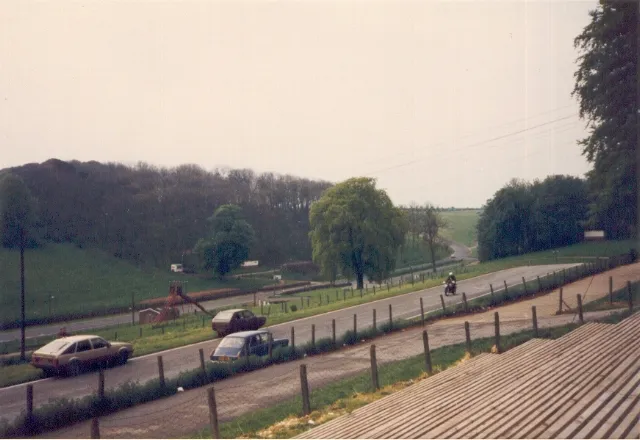
Airfield circuits feel this more than most. Somewhere like Blyton or Bedford means driving on aged asphalt with a thin top layer, and the edges near runway joints will always be dustier than the racing line. Parkland and woodland venues, Cadwell and Oulton and Brands among them, give you shade, leaves, sap, seams and a temperature difference across the surface you can genuinely feel through the wheel.
The visual tells worth learning
Walk or cycle a lap before your first session. It's the cheapest setup information you'll get all day.
Colour change. Fresh asphalt is dark and even, often with visible grain. Older, polished tarmac goes pale grey and glassy. A pale patch in a braking zone means the tyre has less mechanical key, so plan to be gentler on initial pedal and to release a touch earlier.
Repair strips and crack sealing. Those wandering black lines, tar snakes to most of us, sit proud of the surface, soften in heat and go slick in the wet. Crossing one under full brake load is usually fine. Crossing one mid-turn while asking the front to steer and slow at once is where people get caught.
High-friction dressing. Some circuits apply an abrasive surface at the heaviest braking points. It bites when dry and can be surprisingly keen in the damp, but it also eats tyres, so don't build a habit of leaning on it lap after lap.
Rubbered-in line. A dark, wide band means rubber has been pushed into the pores of the tarmac. It's your friend when dry and your enemy when wet, because rubber plus water equals ice.
Edges and entry drag. Gravel dragged on after an off, plus dirt washing across a corner entry, makes the first metre of your braking zone inconsistent. Off-line grip is always worse. That's fine, just know it before you go for a lunge.
Damp seams, tree lines and the corners that never dry
These are the ones that catch UK drivers. A seam sits under a bridge or through trees, the sun never touches it, and it holds moisture long after everywhere else has dried. Brands' shaded sections, the tree-lined bits at Oulton and the dip through the woods at Cadwell all do it.
The rule is simple: if the light changes, expect the surface to change. Reduce brake pressure at the point where you cross the seam rather than carrying a full pedal over it, and don't add steering angle while the front tyres are doing their heaviest braking work. If you run a circuit in the wet, treat every shaded patch as wet until you've been through it twice in the dry.
Adjusting your braking point, not just your speed
Most drivers respond to less grip by slowing the whole corner down. Better drivers move their braking point and change the shape of the pedal release.
On polished or damp tarmac, brake earlier but lighter: initial pressure a fraction softer so you don't lock a front, then a longer, smoother bleed. You're trading a slightly earlier application for a more consistent release, which protects your minimum speed. On fresh, gritty surface the opposite applies, because the tarmac will take a later and harder pedal without complaint.
What you shouldn't do is keep the same braking marker and simply hope. If the surface at your braking point changes between sessions, and after rain, gritting or a support race it will, the marker isn't the reference any more. The surface is.
Line and throttle when the tarmac changes mid-corner
Where a repair patch sits off the ideal line, use it. Where it sits on the line, decide early: either commit to the patch and accept the grip you've got, or move a tyre's width off it and give yourself a cleaner surface. What you can't do is arrive undecided and then add throttle while straddling the edge of the patch, because the loaded tyre will let go on the side you didn't plan for.
For throttle, look for the darker, rubbered band and get the car settled onto it before you open the taps. If the exit runs onto a pale, polished apron, feed the power in over a longer period. That's the same discipline as a wet line, just applied to a dry lap.
Build your own surface map
Keep a notebook, or a note on your phone, with a line per corner: surface condition, what the car did, what you changed. Three track days at the same circuit will give you something more useful than any generic setup guide, because it's a map of that track's quirks on the day you actually drove it.
Grip isn't a number. It's a location. Learn where it lives on the lap and you stop fighting the circuit and start using it.