The Late-Braking Trap: Why Entry Confidence Starts Before the Marker
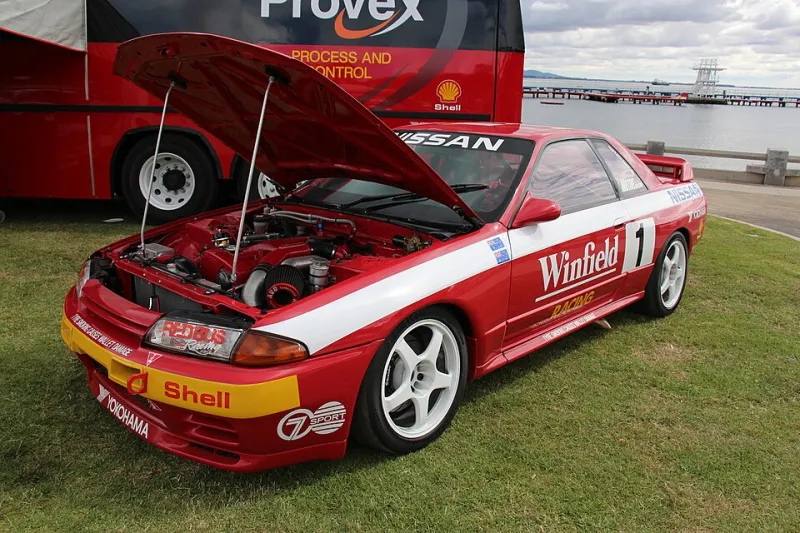
Photo: Sicnag, CC BY 2.0, via Wikimedia Commons
Later braking is seductive. It looks brave, it feels dramatic, and it is easy to measure. You pick a marker, move it five metres deeper, and tell yourself you are making progress. Sometimes you are. More often, you are masking the fact that your reference points are vague, your release is rushed and your understanding of traction is optimistic.
The Lap-Time Story Nobody Wants to Hear
A late braking point is not a skill in itself. It is a symptom of confidence. The driver who brakes later than you is usually not winning because of the brake pedal alone. They are winning because they know exactly where the car is, how much grip is available and how to release the pedal without upsetting the platform. If you copy the braking point but not the release, you arrive at the apex with a car that is still unsettled and a steering angle that is doing too much work. The exit speed suffers, and the stopwatch notices.
At UK circuits, this plays out everywhere. Brands Hatch’s Paddock Hill rewards a settled entry more than a heroic lunge. Donington’s Redgate is all about release and rotation, not simply how deep you can go. Oulton Park’s Lodge is another place where a calm, repeatable entry sets up the exit that actually matters. Braking later into these corners can feel fast while quietly ruining the next straight.
Weak Reference Points Hide in Plain Sight
Most amateur drivers do not have a braking marker problem; they have a marker consistency problem. A tree, a patch of tarmac, a marshal post or a kerb edge can all work, but only if you use the same one every lap and know which part of it you are aiming at. If your marker moves depending on how you feel, you cannot diagnose anything. You are just guessing with extra commitment.
Build a simple hierarchy. Use fixed boards first, then permanent trackside features, then surface changes as a backup. Do not use a braking marker that only works in one lighting condition or when the car is at a particular fuel load. A good marker is boring and repeatable. Boring is fast.
Release Control Beats Brute Force
Trail braking is not a magic switch. At its most basic, it is the progressive release of brake pressure as you add steering. The mistake is treating it as a binary: either full brake or no brake. The useful skill is the middle ground. You want to feel the front load up, then bleed pressure as the car rotates. If you release too quickly, the nose lifts and you lose the platform. If you hold too much pressure, the front tyres get overloaded and the steering goes flat.
This is where a smooth entry often produces a faster exit. The car is settled earlier, the driver can get back to power sooner, and the traction limit becomes something you can feel rather than something you gamble on. In damp UK conditions, that margin is even more valuable. A rushed release on a cold, greasy surface at Snetterton will cost you more than a slightly early brake pedal ever will.
Rotation Is a Result, Not an Input
A lot of drivers try to create rotation with the steering wheel. That is usually a sign that the brake release is not doing its job. The car should rotate because the front is loaded and the rear is unweighted in a controlled way, not because you have added more lock and hoped for the best. If you find yourself sawing at the wheel on entry, go back a step. Brake a little earlier, release a little smoother, and let the car take a set.
A Drill for Your Next Track Day
Pick one corner you know well. Brake five metres earlier than your usual point and focus entirely on release. Note the minimum speed, the steering angle at the apex and how early you can get back to power. Do three laps like that, then move the marker forward gradually. You are not chasing a later braking point; you are building a repeatable entry reference and a release you can trust. Use a lap timer or data logger if you have one, but the real test is whether the car feels calmer and the exit speed improves.
Brake later is a symptom, not a skill. The drivers who make it look easy are usually the ones who have mastered the earlier part of the corner. They arrive at the apex with the car settled, the steering unwound and the throttle opening. That is not a braking achievement. That is entry confidence, and it is worth far more than a marker moved into the gravel.