Breeze Is Data: The UK Track-Day Wind Log
Photo: Spurzem – Lothar Spurzem (edited by Alchemist-hp), CC BY-SA 2.0 de, via Wikimedia Commons
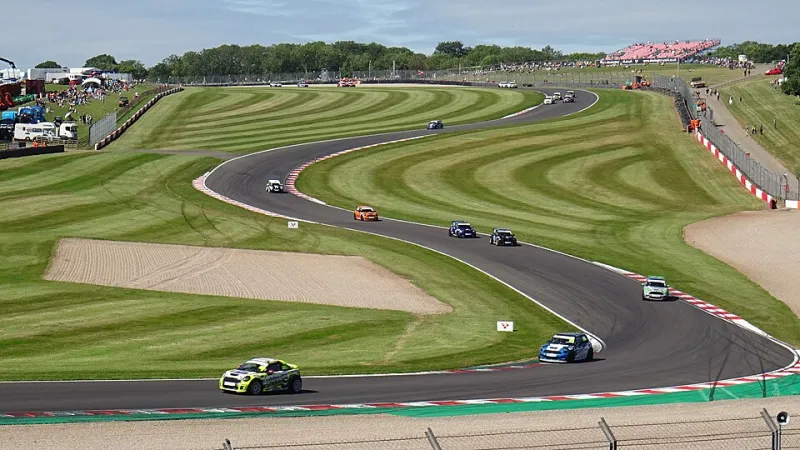
Most of us check the forecast for one thing: rain. If the little cloud icon has no drops on it, we file the day under dry and stop thinking about the weather. That is a mistake at somewhere like Bedford Autodrome or Anglesey, where a steady 15 mph crosswind can make a braking marker feel like it has moved ten metres and leave the car oddly light through a fast direction change.
Wind is not background noise. It is a measurable input, and on exposed UK circuits it changes the car before it changes the lap time. The trick is to treat breeze like any other setup variable: observe it, log it, and only act when the evidence is consistent.
Wind changes the car before it changes the lap
A crosswind does three things at once. It adds yaw angle to the body, so one side of the car sees more pressure than the other. It disturbs the aero platform, which matters most in fast corners where ride height and roll are already doing delicate work. And it changes cooling and tyre temperatures unevenly, because one side of the car is getting a free air pump while the other is relatively sheltered.
A headwind and a tailwind are different again. A headwind adds drag and can help braking stability, but it also cools the brakes and pushes the car around under deceleration. A tailwind reduces drag, so the car may not slow as readily and the brakes work harder. Neither is automatically faster or slower. The point is that the car is not doing the same thing it was doing an hour ago.
Start a wind log, not a wind story
Forecasts are useful for the general picture, but they are not a track-side instrument. Use the Met Office or BBC Weather to know what is coming, then confirm it at the circuit. Flags, trees, marshal posts, the way awnings are behaving, and any nearby windsock all tell you more than a phone screen.
Log one line per session. Note the time, the approximate speed, the direction relative to the track, and whether it is steady or gusty. Forget compass points for driving purposes. What matters is whether the wind is a headwind, tailwind or crosswind at the corner you are about to take. A simple Beaufort-style note is enough: calm, light, moderate, fresh, strong. Add a word on gusts: none, occasional, constant.
That log does two jobs. It stops you blaming the car for a problem that is actually weather, and it gives you a baseline for the next session. If the wind swings 90 degrees after lunch, you will know why the car suddenly feels different.
Where wind bites first
Exposed braking zones are the obvious place. Long straights at Snetterton, Bedford and Thruxton give the wind time to push the car offline before you even touch the middle pedal. A tailwind down a main straight is the one that catches people out, because the car is still carrying speed when the braking marker arrives. A crosswind is worse for stability, because the car is being pushed sideways while the front tyres are trying to do their hardest work.
Fast corners with aero load are next. Anywhere the car is relying on downforce to feel planted, a crosswind can make the platform feel nervous or vague. Crests amplify it. So do quick direction changes, where a gust arrives mid-transition and upsets the roll. Sheltered sections can flatter you into thinking the wind has dropped when it has only been blocked by a bank or a grandstand.
Braking markers become a range
Do not rewrite your braking markers after one windy lap. Treat them as a range instead. If you have a tailwind on the approach, expect the braking zone to stretch. If you have a headwind, expect the car to slow more readily but also to feel less settled. Move your reference point a little, then read the result over three or four laps.
The same applies to the pedal. A crosswind can make the car move under braking, so the instinct is to stab the pedal harder. That usually makes it worse. Smooth initial pressure, then a progressive build, keeps the platform calmer. If the car is wandering, you want less sudden weight transfer, not more.
Lines and inputs: work with the push
If the wind is pushing you wide on entry, give yourself room. A slightly wider entry and an earlier turn-in can help you avoid adding steering lock mid-corner, which is when the front tyres are least able to cope. If the wind is pushing you toward the apex, open the entry a touch and let the car breathe. Do not fight the breeze with a big correction. Small, early inputs are worth more than a dramatic save.
This is also where tyre temperatures matter. A crosswind can cool one side of the car and load the other. If you see a temperature split after a session, ask whether the wind was doing the work before you reach for the pressure gauge. Chasing a wind-induced split with pressure changes is how you end up with a car that is quick in one direction and horrible in the other.
The two-session rule
Gusts are not setup data. If the wind is constant for two sessions and your notes show the same behaviour, you can think about a change. If it is gusty, drive to the gust. That means leaving a little margin in fast corners, braking a touch earlier when the car feels light, and accepting that the lap time will move around. A windy UK track day is not the place for a knife-edge setup. It is the place for a car you can trust when the next gust arrives.
Keep the log. After a few events you will start to see patterns: which corners at which circuits are sensitive, how much wind it takes to move your braking point, and whether your tyre temperatures are telling you about grip or about breeze. Wind is one of the few variables you cannot buy off with a set of dampers. You can only read it, log it and drive with it.